Showing posts with label Ethiopia. Show all posts

Wars will cool, as blonde-haired people complain

In a previous post, I stated that a hot war in the Global North is good news for the Global South, which will get a break from US-imposed and Western-encouraged violence.

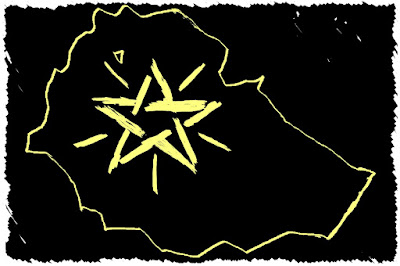
The pause in the Western-backed regime change effort in Ethiopia, diluting and hijacking the cause of people of Tigray as a proxy force, has held. A truce, between the government in Addis Ababa and the Tigrayan rebels, has been successfully sustained, to the relief of millions of people.

Yemeni peace on the horizon

Another bombed and impoverished land, Yemen, also experienced relief as of the start of this month. Coinciding with the Ramadan ceasefire, the aged former president Abdrabbuh Mansur Hadi stepped down on 7 April, entirely removing the purpose of the US-backed Saudi military intervention into the country and further robbing the UN-recognised regime of credibility. This was inevitable from the day the bombs first exploded above the ears of that oppressed nation.

But Saudi Arabia need not be berated, nor should it necessarily feel any further wrath for its part in a grave crime. From the start, they were only doing the bidding of the United States. Also coinciding with the cessation of hostilities in long-suffering Yemen was the mockery of the United States President, for the first time, on Saudi television.

Preceding the developments in Yemen, was the refusal of both the Saudi and Emirati leaders to talk to the US President about oil. Therefore, much as predicted in an earlier post here, it may be Mohammed bin Salman himself who shall lead his country's revolution in the wake of a conclusion so unfavourable to the United States in Yemen.

The timing of the cooling off of the conflicts is aligned, spectacularly well, with the diversion of US attention to Europe. For a change, the Global South seems to be getting safer.

Is the "purveyor of violence" distracted?

Is a trend towards peaceful settlements and cooperation now growing internationally, prompted by the increased distraction of the United States and its allies by the conflict in Europe? Now that people with blue eyes and blonde hair are being killed, quite regrettably, might people with dark tones of skin now finally be given a break?

With a sufficient pause to rebuild themselves after a foreign-imposed war of intrigue, could nations regain their splendour, pride and dignity, such that they are the envy of others, and such that they are truly able to calculate what they were robbed of?

Could the partial withdrawal of evil from Africa and the Middle East be evidence of where it emanates? Could the successful ceasefires, when US interest is diverted away, be evidence that, as asserted once by Dr Martin Luther King Jr., the United States is “the greatest purveyor of violence in the world”? Could it be that rather than being confronted spontaneously by random villains such as Saddam Hussein or Vladimir Putin, the United States is itself the single concentration of world evil?

The common denominator in world conflicts is the United States. The United States is engaged in every conflict or has taken a side in some way, suggesting its own regime is the vile source from which violence, coercion and killing emanate.

Upon realising the above, will nations take steps to fortify themselves against the supreme international evil and prevent it from returning to desecrate their innocent land?

Read More »

Passivity, manipulated outrage, and the solution

The Ukraine war perfectly illustrates how outrage regarding foreign conflict zones is generated selectively and handed to passive consumers, who drink stories like cans of Coke. Countless conflicts and even the names of countries are unheard of until someone decides to sell them.

With Ukraine, we are presented (through the international media and through social media) with a supposed reality in which a country (Russia) launched an unprovoked attack on its neighbour. This caused citizens all across the world to spontaneously denounce this apparent act of evil.

Ukraine seemed to come into existence in February 2022. People were given primers explaining what Ukraine is and where it is, so they can know better than everybody in Russia and in Ukraine itself.

Likewise, many conflicts and supposedly valiant struggles, such as in Syria, ceased to exist when the stories stopped, because the enemy (in that case the "Assad regime") was not being defeated as planned. As the manipulators lost interest, so too did the manipulated.

Bought outrage

Ukraine came to nobody's attention by their own will.

In reality, no citizen of any country denounced anything or rose up against anything that happened in Ukraine. The government and the international media simply decided to coax and convince the population of countries like Great Britain into thinking it was "the done thing" to condemn Russia. We used just the same approaches we use when marketing soft drinks to people, to get them to buy a ticket on the outrage bandwagon that the government thinks they should buy.

Setting aside the question of whether or not it is morally righteous for us all to fly Ukrainian flags from our windows, we should also be interested in knowing if we have strings, and if somebody is pulling them.

Consider whether the decision to care so much about Ukraine, as opposed to conflict-ridden Yemen or Ethiopia, was really your idea. Was it not in fact caused by your awareness of Ukraine, and complete unawareness of Yemen and Ethiopia? If so, is the one pulling the strings of your outrage in fact the one responsible for providing your daily news digest or delivering your evening news broadcast?

Where are all your other flags?

Which side are you on, between Morocco and the Sahrawis in Western Sahara, or between rebel Tigray and the forces of Addis Ababa? Between the Ansar Allah-led administration in Sanaa and the exiled government of Abdrabbuh Mansur Hadi? Between Kashmir and the Indian occupation? Oh, of course, these places and combatants don't exist, because the media has not given you a primer on them and told you who the bad guy is.

Whose side were you on between Kiev and Donbass, during the eight-year-long phase of the Ukraine conflict before the Russian invasion? But of course, that never happened, because the media ignored that.

One could argue that some of those conflicts aren't worth choosing a side in, because they aren't severe enough and the casualties are too low, but why should that influence anything? Is the "bad" side really just the side that was reported to have caused casualties or escalated the situation at a particular moment of news coverage, and no history or context is needed? What kind of moral system would that be?

For many, only the things appearing on television screens or socially encouraged social media feeds exist or deserve any comment. Occasionally, someone might make a social media post trying to showcase horrors in their country, but if it wasn't on the news, most of us will just ignore it and move on, dismissing the poster as some liar or lunatic. The news media may later assert something with no evidence at all, and people will accept it.

Build your own news service

People have committed themselves to the silliest causes due to some minute of tear-jerking manipulation, while being blissfully unaware of other causes in the world, because someone else they can't even name is manipulating their news feed. People even ultimately end up giving their lives for that reason, too, misled like cattle by personages they know nothing of.

It is also really easy to break someone's control of your information. You can simply build your own news digest, using tools like paper.li or any number of news aggregator services, according to which you can select the sources you feel provide balanced coverage of world events. There is no reason to only be aware of a conflict or controversy that some talking heads think it is important to talk about, for their own reasons.

The person deciding if a country needs your support can easily be you, rather than someone else. It is in fact possible to know about every country in our world, to be aware of the strife or injustice taking place in all of them at all times. Is this not better than receiving the painfully abridged account that someone else wants to give you, covering a particular locale and a particular time favourable to them?

People have many buttons that can be pressed by others, wanting to control them like robots. It makes sense to at least try to guard some of them, especially the button of emotional appeal, so you are more independent of manipulation and able to come to independent opinions.

Read More »

A snag in the Global North's global domination?

Much of the Western press and leadership are portraying the East-West conflict over Ukraine as a temporary issue that will be quickly remedied by regime change against what they see as problematic leaders like Russian President Vladimir Putin. In some ways, they are correct. 

Since the end of the original Cold War, the main tension in the world was emerging in the North-South relationship, not the East-West conflict, making the current geopolitical situation something of an anomaly. Except for direct contests over hegemony, the main struggle in the world has always been between the exploiter and exploited, or the ruler and the ruled.

War against the Global South

With wars mainly being "interventions" targeting Global South nations like Iraq and Libya, and the Global North having a distinct advantage, able to project the image of itself as a global policeman under the authority of the United Nations Security Council, for a time it seemed as if a simmering North-South conflict was becoming the accepted reality.

The alterations to the language of war in the 1990s and early 2000s to speak of humanitarian intervention, rogue states, terrorism and global policing showed a shift, conscious or otherwise, to waging wars on the economically undeveloped nations. Military technology and wargames changed to target lightly armed resistance groups, rather than peer opponents.

What is happening now, with the renewal of conflict between the West and Russia, is an unexpected hiccup in the dominance of the Global North and especially the Western powers. Russia had essentially been considered a solved problem and a defeated enemy for over thirty years, and the West had moved on to other targets. Russia refusing to be dead, and being capable of challenging the West again, is a potentially fatal impediment Western goals.

The wrong battle

For the West to now be bogged down in a contest with Russia essentially means that the Global North is unable to fight the battle it wanted to fight, namely a battle to maintain dominance over the Global South. The West is mainly responsible, failing to create Global North alliance structures that would include Russia and potentially even China in a world order that would see the North dominate the South.

The selfishness of, very probably, individual politicians and thought leaders in the United States and United Kingdom is most likely to blame for the failure of the Global North to form a united front against the Global South (a godsend for the peoples of the latter). It seems like the idea of having Russians and Chinese as part of the club was just unacceptable to English-speaking elites, who would prefer that the "civilised" world and its economically vital activity are only led by people who look and sound like them.

Russia and China are essentially too "developed" now to be considered an economic periphery that can be conquered or exploited by the West. Countries like India, Pakistan and Iran can also increasingly be considered "developed" and don't really fall into the "Third World" stereotype either, as they may have done in the past.

What next?

While there may be attempts by the East and West to use the Global South as a proxy battlefield again, like they did in the original Cold War, the degree of resistance there against all such interference will likely increase. The Global South was on the rise in its own right, with an increasing willingness of local regimes to defy any expression of global authority or global good, and instead take possession of their own resources. Leaders such as Chavez, Morales, Gaddafi and others were not anomalies but part of a trend that was sure to continue, and will continue.

Even if Western regimes are not impeded much, or Russia and China are quickly disposed of and the Global North falls under Anglo-Saxon authority, their attempts to police and control the Global South will still go severely awry. We will still see terrorism, devastating wars and refugee flows that, in addition to climate change, will complicate Western dominance. They will be unable to pacify the populations of the Global South, who will continue to elect leaders who defy foreign exploitation and dominance. As such, even the most optimistic forecast for the West is one of war, waste, misery and the defeat of global hegemony in the long term.

The thousand cuts to the globally dominant Western powers were already going to be a death sentence for it, even without the West encountering a resurgent Russia and having to fight an intra-North battle.

While the war in Ukraine may be sad for people with blonde hair and blue eyes, it offers much-deserved relief for some people of the Global South. Perhaps they may be spared, for a time, from being the focus of murderous rampages by the supposedly civilised West. The situation in Ethiopia seems to have calmed around the time the conflict grew in Ukraine. We should be mindful, however, that the Western-inflamed humanitarian disaster in Yemen is unabated. As the wars in Bosnia showed us, violence may briefly return to the Global North, but is almost continuously exported to the Global South.

Read More »

Tigrayan rebel setbacks in Ethiopia were predictable

In December 2021, Tigrayan rebels were advancing on Ethiopia's capital, Addis Ababa. They would soon arrive and remove the regime. Now, they supposedly have had a change of heart, and are ready to negotiate. What happened?

Apparently, Tigrayan rebels, who reject the central government's overreach into their homeland, did not see either the hypocrisy or the logistical nightmare of attempting to conquer the whole country themselves. What happened, on their part, can only be described as idiocy, and this is putting it generously.

How to win independence

Compare this with how Finland was able to fend off Soviet troops in the winter of 1939-40 and negotiate, so that it made fewer concessions to the Soviets. The Finns could not afford to withhold concessions, much less hope to march on Moscow and remove Stalin, as it would have meant the end of Finland.

The Finns have independence because they pursued a wise course. Their extreme military proficiency was used to defend the limited area that they believed they had the right to, as a nation. Their enemy came to respect their demands and not encroach, and a mutual respect was maintained thereafter, as it should be between any two nations bordering one another.

How not to win independence

Tigrayan rebels accomplished significant military victories against the central government. These were sufficient for them to make political demands and fortify themselves in the Tigray region. Instead, they chose to attempt regime-change in Addis Ababa, and may have jeopardised their chances of getting any agreement at all.

The government of Ethiopia is not likely to accept demands from what it will now see as a merciless terrorist minority bent on seizing control over the country and over, if necessary, the corpses of most of the Ethiopian population. The rebels risk resembling those in Syria, who cannot possibly represent anything more than the people of the territory under their immediate military control. Even that level of support for the rebels in Syria is doubtful, since, at their every retreat, local villagers rejoice at the return of the central government.

Foreign-backed independence?

It is when those who seek national autonomy suddenly exit their historic lands and spread violence into lands of others, that they are discredited and the foreign hand behind their ambition is exposed. Some Syrian Kurdish factions did this, withdrawing from Turkish troops and moving into the lands of the Arabs, protected still by the anti-ISIS air power provided by the US, becoming hypocrites.

The so-called Syrian Democratic Forces (SDF) is a hypocritical sham, imposing Kurdish rule over Arabs and in turn representing American manipulation of the Kurds, and will fail with the eventual US withdrawal. The so-called Tigrayan People's Liberation Front (TPLF), which may have similar foreign backing if its critics are correct about it, risks being the same kind of sham.

One cannot support an independence movement that deprives others of their independence and their rights. As soon as the foreign hand behind its outrageous and excessive ambition is gone, such a movement risks collapse.

Read More »

States versus social networks

Social networking websites and apps aim to manage almost every aspect of your life, curtail your access to information and take responsibility for your safety. In this regard, they are replacing government authority with their own. But when it comes to a clash with states, can they win?

As some background, Russian President Vladimir Putin allegedly said at this year's Valdai forum that social media companies had attempted to take on some form of state-like authority and displace the state itself in this regard, and that they had failed. The remarks are quoted by Russian broadcaster RT.

Unfortunately, the source linked by RT is a more than three hour-long video with an English translation in which Putin does not seem to make the alleged remarks, so it is hard to tell what exactly he meant.

If the RT quote was valid, Putin may have said large tech companies tried to assume some roles traditionally held by governments, and the attempts were "fleeting". He would have claimed, "in the US, the owners of these platforms were taken down a peg or two as it was in Europe as well," with some clarity added that this was due to "anti-monopolisation measures".

So, what did Putin mean?

Antitrust laws

The European Union currently has the Digital Markets Act (DMA) on the cards, which apparently will prevent a tech company from trapping users in an operating system or bundle of apps that solely favours its own services (and by extension news feeds) over any other firm's. It also apparently hopes to make sure users can uninstall pre-installed apps, which presumably means preventing US digital giants from forcing European users to use their apps and look at their news feeds.

Antitrust lawsuits have already targeted large tech companies in the US and Australia, with Amazon and Apple often being in focus. Facebook has also had a hard time in Australia, where the government sought for Facebook to pay news outlets for their content and Facebook attempted to push back against the government with help from Alphabet (who own Google), by carrying out a news blackout. Back at the start of the year, the push from Facebook failed to deter the Australian government and in fact other governments took Australia's side.

Subduing African governments?

Social media companies are uniquely confrontational towards governments, lately seeing themselves as authorities on par with some governments. Silicon Valley-based corporations like Twitter certainly see themselves as more reliable and legitimate authorities than African governments, as can be seen from their enforcement actions targeting government accounts in Uganda and Ethiopia.

Twitter's removal of government communications because they promoted violence is an attempt to de-recognise a state, because the monopoly on the legal use of violence is a defining aspect of a state. It is also an ineffective and failed usurpation of the state's responsibilities, since a state can still commit or allow violence whether Twitter deletes posts about it or not.

Victory over Trump?

Some might consider the banning of Trump to be a victory of social media over the US state, but in reality Trump was always an outsider to the US state and it was the US state that defeated Trump. The other branches of the US government certainly hated Trump, as did a majority of lawmakers. The spectre of these state figures cracking down after the evident electoral defeat of Trump was the factor most responsible for compelling organisations like Twitter and Facebook to kick Trump off social media.

The behaviour of social networks certainly suggests they have or had a willingness to compel governments to do their bidding, yet they have been ineffective. The actions of Twitter in Africa have simply resulted in bans targeting the website. Governments have shown they are willing and capable of pushing back against what are really just weak outfits. Social networks can be forcibly broken up due to laws, taken offline or bankrupted by fines at any moment the state truly loses patience with them.

States as continuous victors

Whether or not Putin was actually making comments like the above or sought to discuss the above developments, I do not know. However, the reported observation that social networks are losing their battle with states is valid. There have been plenty of times when new media, organisations and other actors created upheaval in the internal and international order, but they are ultimately crushed under the tank-treads of whoever wields the real power. At this moment, that still means nation-states.

Read More »

How Russia and America pick sides in civil wars

There are signs that Russia and America are taking sides in the conflict in Ethiopia. But who is worse than the other?

Throughout the Tigray crisis, Russia has been supportive of the Ethiopian government managing its own internal affairs. On the opposing side, the American State Department maintains a list of condemnations of the same regime's handling of its affairs.

The Tigray Region's people have genuine grievances against the government of Ethiopia, and increased autonomy may be the solution. However, with separatist rebels seizing core territories from the central government and threatening to march on the capital Addis Ababa, it is clear that something is not right with what should be a very much local conflict for the rights of a region.

While the United States has expressed disapproval of the rebels' advances, it is also clear that the US is no friend of the Ethiopian regime anymore, having applied sanctions against it. As always, the sincerity of US intentions with regard to human rights and their sanctions in response to abuses should be doubted. The US staunchly backs notorious human rights-abusing regimes nearby, such as Israel and Saudi Arabia.

It should also be considered that Ethiopia was a US ally since the fall of the former Soviet-backed Derg regime in the country. It had sought to maintain policies favourable to the US, including good relations with Israel, and was more reliable to the US than the uncooperative regimes of adjacent Eritrea and Sudan. Why America might choose to undermine its own ally and convince it to move into the Russian and Chinese camp, giving Moscow a new ally at no cost, is difficult to understand.

One may compare the possible battle for Ethiopia with the far more severe but now frozen conflict in Syria, where the US also placed sanctions on the central government. In Syria, however, the US went a step further and directly armed rebels in the country. This turned out to be a mistake, as the rebels were not really on the brink of victory and were later pushed back by the central government with Russian assistance from 2015 despite receiving their own aid from the United States.

Ethiopia may have irritated the US by growing closer to China rather than Russia, but Russia stands out as more vocal and more passionate than its economic powerhouse ally when it comes to war and conflict. Russia, not China, wants its place on modern battlefields with the US, and it seems to want to be on the opposing team to America.

Russia’s position on conflicts is usually just the UN’s position

By and large, Russian and Chinese positions on foreign policy are not radical or revisionist in nature. In almost every case, Russian and Chinese demands align entirely with the United Nations. Despite the unfavourable coverage of Russian foreign policy in the Western press, it is the United States rather than Russia that more often seems to ignore international law and the consensus of the United Nations.

The US routinely declares governments to be illegitimate and announces a new regime, as it did with Venezuela. This is a violation of the norms of international law and undermines any sincere hopes for a rules-based order, which requires not wantonly interfering in other states and instead going to recognised international bodies with one's concerns. One country's government, whether Western or not, cannot simply act as a kingmaker by declaring part of the world under new management, faxing out communiques for the press to reprint obediently and tell everybody the news.

China and (with some exceptions) Russia are fierce defenders of international law. They back up regimes not because they like them or approve of their human rights record, but because they are the recognised government and guarantor of stability in a country. In their view, regime change is reckless and irresponsible and promotes chaos, as observed in Iraq and Libya. It is an obligation in international relations that you recognise the sovereignty of another state, even if it is the not the kind of state you would establish yourself.

Surely, you might then say, Russia is at a disadvantage to America. Russia is stuck defending old regimes, while America gets to topple them with sanctions and every other tool in its toolbox? Surely, every government in the world will flip gradually to the side of America? This is the thinking that seems to guide aggressive American foreign policy, but the Russians see things differently.

Russia, and possibly America too, may not have the resources or requisite influence to overthrow all the world's governments and set up new ones. Russia does tend to go for lower-cost strategies or wait for the other side to become tired, whereas America tends to throw money at problems. All things being considered, the Russian approach seems to be working better.

Russia winning allies effortlessly while the US struggles to retain them

While America failed to turn Syria into a friendly country despite pouring significant funds and ten years of its time into the effort, Russia won a major ally with very little effort and less time just by shoring up the Syrian regime in its time of need (it even profited from weapons sales and acquired a large military base). While America devises sanctions to pressure its former long-time ally Turkey to do its bidding, Russia simply doesn't do that and therefore is a more appealing partner to Turkey.

Russia is able to appeal to America's allies to change sides based on the mere fact that America is so unappealing as an ally. America doesn't want the outcomes other countries want; it wants what America wants and has no tolerance for the interests of others. By just tolerating other regimes and their goals (what has been called a multipolar world in Russian foreign policy advocacy), Russia is able to steadily ally with everyone at very little cost, whereas America has to enter a costly confrontation with each government in the world.

While the US may decide to overthrow the government of Ethiopia, and may see Tigrayan rebels as possible servants in a new regime, such a step would not convert more of the world or even this one country to America's cause. The Russians and Chinese are not going to help the Ethiopian government oppress the Tigray Region and create a spectacle for Americans. They will simply pursue a peaceful settlement in the country. Tigrayan fighters, if they really received American backing and were victorious, would eventually just desire a peaceful homeland rather than to act as agents of destruction against some regime, and the Americans would begin to hate them.

Read More »