Showing posts with label history. Show all posts

Dead democracy theory

There is the 'dead internet theory' according to which most of the supposed humans on the internet are fakes, although this hypothesis probably doesn’t withstand scrutiny.

However, things that are far more important may be mostly fake. The advanced democracies in what we call the West are home to exceedingly unpopular regimes that seem to rely more on backing by pre-existing rulers, manipulative lobbies and media conglomerates than authentic popular support. As such, the democratic mandate of these regimes could be said to be false.

When a democracy gets too old

If the majority of people are against the regime, then such a regime cannot be said to be a living democracy. Perhaps a democracy being "advanced" translates to it being "aged", dying, or perhaps dead. These democracies are advanced and unflinching in their confidence not due to some sort of robustness and maturity, but because of their inflexibility and lack of any true loyalty to the people.

One can speculate that advanced democracies are long dead, having sagged outside the bounds of their original constitutions to become evil. Stepping outside of metaphor, it would mean they have existed for so long that any way of gaming the system to thwart the wishes of the people has long ago been discovered and refined to perfection by the few who have power. Every loophole is mapped by those who need to know about it, such that there are infinite ways of thwarting the people and defying their will, while maintaining the window-dressing of democracy. 

Rulers have effectively insulated themselves from the people, so that the system is effectively a lifeless and sterile corporate husk. The only “democracy” to be witnessed is futile cosmetics and the repetition of the word itself, more like an article of faith than a factual reality.

Young democracies are full of life and purpose, having recently emancipated their people. However, all old democracies, even in the ancient world, eventually perished, having lost support among anyone other than a small elite who were cheating and exploiting the system.

'Lesser evil'

Voter apathy is far worse than mere low turnout in elections, since it includes those who only grudgingly cast votes for the lesser evil, as if any living democracy would be like that. This gives rise to a reality in which nobody other than a tiny minority, heavily engaged in the political system and shaping the available candidates, believes in its legitimacy. Meanwhile, the vast majority are quietly resigned to being governed by whoever is in power or picking from a menu that features nothing they want, feeling certain that any effort they made to participate would be thwarted successfully by the pack of wolves who fought their way to the top long ago.

The result is that advanced democracies may be hostage to a hyper-vocal and aggressively involved minority, perhaps twenty percent of the people, often driven more by their deep contempt for all the other people than any respect for their will.

If the above speculation is right, then the ones who most like to pretend democracy is alive may be those who believe it serves their narrow interests. Such a group is hardly the people, who are in fact lifeless corpses kicked and beaten by that narrow group who rule. The say of those lambs is absent, they are dead, and what persists is only the hijacking of the state by predators eating them.

All of this is, of course, only an exercise in speculation, like the dead internet theory. But it helps to sometimes posit the most diabolic interpretation of the state of things, so to stimulate thought.

Read More »

Irish unity would be fair, but also destabilising

Sinn Féin is set to be the largest party in the Northern Ireland Assembly, after the results in local elections that took place in the United Kingdom on May 5.

What has happened pushes the UK towards a perhaps inevitable breakup, as Sinn Féin has long sought a united island of Ireland, which would be noble if they can secure majority support in Northern Ireland for it.

A return to Great Britain?

The people of Britain actually have no need for Ireland. If we were to lose Northern Ireland, the imposing name of the “Kingdom of Great Britain” (or just Great Britain) could be restored as the official one, as could the flag of 1707-1801, which British troops carried to war against America and France. Such days were hardly those of a lesser power, as we are now.

Even if things went a step further, and Scotland was also to gain independence, England would likely remain a powerhouse, keeping the neighbouring countries in its influence, unless the European Union was to actively work against such sway

Unionist backlash

The only peril may come from unionists in Northern Ireland, and their ties to that land, in the event that they refuse to accept the breakup of the country they were loyal to. Political radicals and aggrieved parties often end up punching above their weight, and it is not atypical that they can take a whole country hostage with their politics.

As well as a surge in violence taking place within a united Ireland, possibly drawing in outside forces such as the European Union, there is a greater risk of political radicals fleeing Northern Ireland to assume huge influence within the newly diminished Great Britain. Should anything atrocious befall the unionists residing in the united Ireland, or even a murmur of it, it would result in radical transformations of opinion in Great Britain, creating increasingly hostile English feelings towards Ireland and its EU backers. As well as undermining Scottish independence (assuming Irish unity occurs first), a wave of unionism finding a home in Great Britain could also be big enough to turn policy in London in an aggressive or revanchist direction. If Scotland in turn got independence, further flight of radical British nationalists into England could make them even more concentrated and capable of influencing London.

The return of England

In the most extreme course of future events, breakup could result in an English war not just with Scotland and Ireland but, by proxy, with old enemies like France, Spain and Germany via the European Union as the Scots and Irish will warm to them rather than the ostracised England.

The war on Russia's periphery in Ukraine exposes new vulnerabilities for all nuclear-armed powers, revealing that they are not as invulnerable as they had assumed and that the victors of the Second World War have no guarantee of security. Having a nuclear deterrent doesn't prevent conflict being actively inflamed by outside competitors on your doorstep, or result in the adjacent non-nuclear power standing down if you use force. The informal understanding that nuclear powers cannot incite a proxy to directly attack each other's territory and infrastructure is also gone, now. Now, everyone will be just expected to refrain from using nuclear weapons, as long as sneaky enough methods are being used to kill us and there is not a direct clash. This change may cause huge displeasure to Britain in the future, since it creates new rules that put the country in a new state of vulnerability. It allows the peril of a return to past ages, when Scotland was eligible as a French proxy against England.

Restored medieval conflicts

The idea of an English-EU clash reigniting Medieval-era tensions may seem farfetched, but it is not. Medieval leaders were not less civilised or educated in statehood than modern leaders. Some conflicts are inevitable, just because of the configuration of pieces on the board.

England has a much vaster population than Scotland or Ireland. It is not too hard to predict, if the UK breaks up, that these countries will be afraid and possibly even hateful of the economically and militarily giant England after being estranged from it. The temptation to bring in France or other European powers as protectors, and English resentment at this course of events, would be almost inevitable.

Nationalism, however benign at first, can unleash unpredictable and long-buried forces, as it did after the collapse of the Soviet Union. It can create opportunities for outside interference that will jeopardise a country’s security.

When an arrangement works peacefully, like the Union, it is best to treasure it and not to change it, even if we would personally prefer things to be different. This is the same case with the monarchy.

Read More »

UK reliance on European military industry is foolish

Despite the UK presenting itself as the leading defender of Europe, Britain’s armoured vehicle production and repair is going to increasingly take place in Germany, as is shown by British interest in the “Eurotank” project as the means to get a new Main Battle Tank.

However impressive the Eurotank will be, interdependence with the continent we are meant to defend could be a major weakness. We already rely on the Germans to upgrade our panzers at their workshops, somehow managing to brag about it in the process.

We also aim to replace our Infantry Fighting Vehicles (IFVs) with Franco-German wheeled designs, rather than choosing to continue the history of unique and iconic British armoured vehicle designs. Bear in mind that the French and Germans were historic enemies of Britain, at different eras, and the current state of affairs is tantamount to British troops dressing in enemy uniforms.

Europe is no haven

From a historically savvy perspective, Britain growing reliant on German help with armoured vehicles is similar to defeat and demilitarisation at German hands, since no wise British leadership would ever have allowed the Germans or French to seize British military production capabilities and take them to their countries. Especially in a place as historically volatile as Europe, which is already undergoing significant disruption due to the Ukrainian conflict and could face an increasingly violent and destabilised future, which is historically normal for the Continent.

Europe, and Germany particularly, also have a strong historical tendency to instability and conflict that goes all the way back to the Thirty Years' War and perhaps earlier. European integration has been a fact for so little time that to think it is permanent is premature and immature. The advantage of Great Britain has always been its isolation from the contagion of European conflict, by the sea.

Even assuming the UK never returns to an era of tension with the Germans or French, it is still a fact that having our military production and repair facilities be in Germany potentially magnifies security and strategic problems, from espionage to the possibility of Germany itself being simply misgoverned and overrun with conflicts or political intrigue in the future. If things get bad in Europe, they could unnecessarily imperil British national security if we are reliant on sites there for defence production and repair.

UK arms production and repair capability being located in a non-nuclear country such as Germany is also problematic because it creates the possibility that our war production could be wiped out, without being protected by our nuclear deterrent. NATO does not necessarily protect Germany from all conflict scenarios, including nuclear ones, with the reliability that the British nuclear deterrent has.

The hollowness of Brexit

Britain’s disinterest in being an independent arms producer, and increased interest in partnering with the French and Germans instead, makes Brexit less significant, nay meaningless, in terms of turning the country into an independent strategic player. Moreover, it reveals that those in business and government who decide our priorities are merely resentful about the departure from the EU and want to do everything to offset any impact on our trajectory as a country.

British government and corporate elites have no real thought for national security. They don’t see our island as anything more than a shabby council estate that is to be left behind, to pursue their interests via the United States and the European Union or via supranational organisations like NATO. This may suit them, but it does not suit future generations who will emerge in a country that has no brand, no pride, and no security, being little more than a dump for foreign powers.

Read More »

The best Elon could do to Twitter

Elon Musk seeks to own Twitter and make it a platform for free speech around the world. This certainly is not its reputation at the moment, although it seemed like it in the past.

Many of us (especially if we are at least 30 or older) remember a time when the internet was an experiment in anarchy, rather than a prison of control. It easily seems natural to us that the current extent of control and filtering of content on social networks is just an unwelcome anomaly in what should be the course of human progress to greater liberty and exposure.

Contrary to my wishes, as well as Elon Musk's, Noughties-style online freedom probably isn't really our destiny but just a historical blip. History indicates that any technologically-endowed freedom is likely to only ever be a fleeting thing before some authorities reassert the primacy of the law, but that pattern is a topic for another day.

Restoring Trump?

The political right has rallied around Musk's attempts to take over Twitter. They seem to see a way to get their beloved Donald Trump’s account restored, after so-called "Big Tech" exercised its power in favour of the Democratic Party by suspending his Twitter account towards the end of the 2020 US presidential election.

Whatever happens to Twitter is likely to serve interest groups in the United States, first and foremost the government itself. Although it likely remains the world's most politically influential website or application, Twitter has become little more than a channel for amplifying and rewarding views approved by or entirely constructed by United States government bodies. With time, it has increasingly  aligned with the US government on every issue and teamed up against regimes the US is targeting.

It has reached a point now that, if any other country is as vigilant as the United States about guarding against foreign political interference, such a country will ban Twitter without hesitation.

A dead end

Although Musk's ownership of Twitter may be beneficial to independent media and dissident voices, Twitter is dead. Despite retaining its influence as nothing more than inertia from a prior model under which it succeeded, almost all media stories that succeed there now are artificially boosted by the platform, and are from nauseatingly familiar sources.

Twitter is now little more than an aggregator for common American cable news channels, showcasing the content of such channels as its main attraction, as a way of recapturing the audiences that fled them and suppressing or banning other content wherever possible. Twitter may have, actually, been infiltrated by and bent to the will of journalists hellbent on restoring Iraq War-era levels of manipulation of the public.

The best Elon Musk ought to do is sabotage what Twitter has become, if he can, but the tech companies will never tolerate the return to the wilderness the internet once was. Immediately after Musk unblocks and unbans any content, there will be pressure on the app stores to remove Twitter. Following this, the platform will be effectively destroyed and fade into obscurity.

To set in motion the destruction of Twitter would wipe a stain from the internet, and be a huge favour from Elon Musk if it is achieved. Twitter, like most social networks, is no longer of any benefit to society or human relationships, being a false afterimage of former creativity.

Read More »

The dead tree theory of civilisation

Regardless of the passing novelties of culture, falling like leaves in the autumn, there are indispensable riches that transcend even a dead civilisation or social order, to persist. The essential heirlooms of a civilisation are protected and planted again, like acorns.

The origin of the term "radical" came from the Latin word for "root". Those who were radical would hack at the root, or get to the root of the problem. They would, to use an expression favoured by Jean-Paul Marat, bring the hatchet (or ax) to their root.

Inevitable moral decay?

Far from needing to be hacked down, trees eventually die by themselves. If nothing else brings illness to the tree, its death can occur when it becomes so large that it can no longer support its own weight. Then, however majestic it may seem, it will collapse. A tree may even rot while it stands, such that its great size and apparent triumph over other trees may mean nothing.

There have been successive civilisations that were at the centre of the economic life of the world. Sumeria, Babylon, Egypt, Greece, Rome, and the more vaguely defined "Western civilisation" of the present day, with its multiple centres in London, Washington DC, Paris and elsewhere. There is no disputing that each of them collapsed, nor can we dispute that the collapse was necessary for the continued excellence of humanity, although the modern one cannot countenance its own ultimate fate as anything similar.

Many people of a conservative persuasion believe they see things rotten about our society, things that are continuously changing for the worse. They may point to increased sexual liberty and rights that were not typical of the higher and more accomplished stages of a civilisation. It has been argued that a higher civilisation adopts puritanical moral structures and a focus on scientific and artistic accomplishments in order to impress, and that denying excessive sexual liberty assists in this because it helps to keep humanity focused on human excellence rather than primitive joy. Those of a liberal persuasion, on the other hand, welcome any increase in personal liberty, and will only laugh at the above, but their response likely isn't any newer than the views of people during other declines.

It is difficult to form a rational case in relation to the idea of the moral corruption of society, because the outcome depends on one's pre-existing values. The very process of analysing flaws in the moral character of society requires first of all adopting values without rational justification, such as the view that excellence and intellect are better than laziness and pleasure.

How to detect decadence

Decadence, the steady loss of what gave a culture its value, may manifest in worsening cultural products and art forms that are not worth saving, in contrast to the creations of what would have been considered the works of a higher civilisation in its golden age. Everything is just a passing, worthless thing. This may result in a decreased ability to identify with any kind of culture and eventually, with other people in society. Even still, we may still have powerful governments, reminiscent of empires of old, dependent on the inertia of past accomplishments, up until the moment of their failure.

The idea of decadence implies that those who succumb to it either don't recognise it or don't recognise a problem with it, maybe instead being pleased with it. The concept suggests that a society can become sick without even realising it, because its own capacity to recognise goodness or judge itself is also being corrupted, succumbing to the same cultural and intellectual sickness it cannot see.

Decadence also signifies age. If it is a real sickness, it is inescapable and everyone is somewhat infected. Where the conservative is wrong might, then, not be in his dismay at the diminishing of moral or cultural value, but in his delusions that he can do anything to reverse it. A dead tree cannot be restored to a living one, and the clock cannot be turned back on society. Only a fresh acorn, planted elsewhere, has any potential after that.

To fell the tree

It is possible to appreciate both the progressive and the conservative, to see their roles in history.

The believers in progress perform a necessary role in the life of a civilisation, allowing the adoption of new ideas, new scientific models, and new technologies, but any kind of utopia may ultimately prove impossible or harmful, and so the reactionaries also have a valid role. If indeed a civilisation collapses, those who depended on its present state are not going to be the seeds of a new tree; only conservatives could create new civilisations or establish the next outposts of progress. Think what you like of them, but they bear with them a tried and tested formula for how to construct a society and civilisation, whereas the modern liberal only bears faith in the progress of the existing model and will refuse to go back to past traditions or simplicity.

The conclusion that necessarily follows from identifying what is considered decadent is that a thing is unworthy of respect or loyalty, once it is sufficiently debased that you no longer identify with it. It follows that a decadent culture or civilisation imperils those outside of it, like a rotten tree that threatens to fall when it might be inconvenient and should therefore be felled with all urgency. Its destruction, like that of Sodom and Gomorrah in the Bible, can eventually be justified.

Read More »

Sanctions on Russia won't last

Events in Ukraine are intense and the outcome is unclear. Just about every moral judgment seems to have already been issued. Minds are made up. Virtually all sanctions are being applied to Russia.

The US was trying to pivot to what it sees as the China threat, not Russia. The sanctions applied to Russia are therefore unscheduled, reactive, and possibly disruptive to America's own global strategy.

US thrown off balance by Russian surprises

Because of the degree of coordination between Russia and China, Moscow's decision to act bullishly against NATO-groomed Ukraine may be a calculated move to somehow benefit Beijing and help overturn Washington's domination. The Western leaders react predictably, and all their attention is going to be on Russia for some time.

Events are unfolding similarly to the start of the original Cold War (which was "hot" when it began), but in Ukraine rather than the Korean Peninsula. We are in a period of acute hostility and denunciation that nobody can escape. Crackdowns on allegedly pro-Russian "treason", which encompasses mere remarks and media appearances, may resemble the talk of the 1950s. The dismantlement of global security and arms control treaties guarantees a horrifying nuclear war scare. Both sides will feel as if we confront a faceless, dark, silent enemy whose views and motives we are prohibited from seeing. All news will be the most vulgar propaganda, with barely a shred of truth.

None of the horror will last, however. A kinder politics is always inevitably around the corner, be it ten years away or twenty years away, when thinking people grow tired of the established warmongers and their canards.

Western sanctions on Russia could take a long time to really make people reconsider any foreign policy choices, if they have any effect at all and are not just political gestures to placate our own populations in the West. Difficulty getting something like microchips and the latest mobile phones could, at a guess, take multiple years to actually alarm society in Russia, and they may simply be able to get decent alternative products from China.

Future reset to occur on basis of respect with Russia

The disputes surrounding Ukraine, which at the time of writing were being addressed in a violent and chaotic manner that is difficult to track, could be resolved long before sanctions could hope to damage Russia, and be steadily lifted by dovish future administrations in Western governments. At that point, a certain respect for Russia's security would have developed, rather than merely casting everything the Russians do as villainy.

A final point to consider is that full sanctions on Russia mean the West no longer has any tools in its sanctions box for influencing Russia. If all these sanctions are aimed at Russian policy in Ukraine, more sanctions can't be allocated to deal with other Russian actions, for example, if the Russians choose to be more violent in their intervention in Syria. The West could end up in a position where it has more grievances against Russia than sanctions it can use to retaliate for them, having exhausted them all on Ukraine.

In such a position, Western leaders may be forced to offer sanctions relief in exchange for Russian help on entirely new crises, or the West will appear to be out of options. In seeing as much, Moscow now has every reason to carry on annoying Washington and doing everything to make it uncomfortable around the world, until Washington offers sanctions relief in exchange for Moscow ceasing its own actions.

Read More »

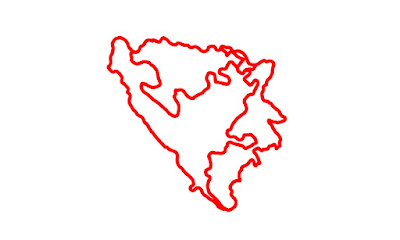
Bosnia likely to fall apart at some point in the future

Comprised mainly of two parts, the Federation of Bosnia and Herzegovina and the Republika Srpska, Bosnia is an irregularity on the map of Europe.

The beautiful Balkan region has long been unstable, with Sarajevo being the flashpoint where the First World War began with the assassination of Archduke Franz Ferdinand, and with attempts to create multi-ethnic states consistently ending in failure there. With the massacres of the Bosnian Genocide, it is a land filled with grudges.

A history of disintegration

The "clash of civilisations" theory of Samuel P. Huntington would hold that the former Yugoslavia is always potentially conflict-ridden because it has seen the competing presence of Catholic, Islamic and Greek Orthodox civilisation. The theory may be too simplistic, but the region is indeed a hotspot of historical grievances.

The Austro-Hungarian Empire failed, Yugoslavia failed, and what exists there now has no particular guarantee against failing again. As geopolitical tensions rise, especially between NATO and Russia in Europe, lines are being drawn again in Bosnia.

Battle lines drawn

Republika Srpska is turning away from the central government in Bosnia and is seeking an imminent breakup. It is being equipped with weaponry from Russia and China, in anticipation of the breakdown of the international liberal order that is now openly challenged. Meanwhile, the Western-allied component that rules from Sarajevo seeks NATO membership. If conflicts heat up around the world once again, there may be no avoiding a war of further disintegration in Bosnia.

The position of the central government in Sarajevo is, of course, fundamentally hypocritical. Their country unilaterally seceded from Yugoslavia, and yet now they declare that there may be no secession from their authority by Serbs. There is no moral justification for supporting Bosnian separatism and rejecting Serb separatism.

In the event of a renewed conflict, there is no denying the inferior strategic position of the Serbs. They are cut off from their natural allies, the Russians, just as they were in the First World War, and enveloped by the NATO powers. However, the Serbs have been swallowed by many empires before, and have proven to be a bellyache to them. They were no gift to the Ottomans, to the Austrians or to the Nazis, and Western-allied Europe would be foolish to volunteer to go through the same symptoms.

Read More »

Great Reset is not a coup or even any cause for alarm

The "Great Reset", espoused by the World Economic Forum, is derided by many for being the idea of an elite who are responsible for the world's problems in the first place. But is that really a historical irregularity that deserves condemnation?

Such things as the Peace of Westphalia and the so-called Washington Consensus shape the political and economic models we know and accept. Both are the works of ultra-elite individuals, representing the microscopic affluent minority among us. Everyone accepted such things and went on, believing it was for the best.

When the super elite try to do the same now, they are met with significant opposition and, dare I say, conspiracy theories from many people who see it as some kind of coup. It is seen by some as uniquely diabolic, a usurpation of all authority over our future, removing our control of our destiny.

In reality, for all its problems, the Great Reset is no coup. Those who came up with it were already in charge of most economic policies, including those things they want to change. This kind of elite-driven reform is a continuation of what we have always known since at least the end of the Medieval era and the formation of modern states.

Great Reset threatens democracy?

Absurd. To condemn the Great Reset as a usurpation of democracy, while favouring the existing economic consensus as somehow more acceptable, is ill-informed. The current economic consensus was also arbitrarily set up by a small elite, and is demonstrably harmful to society and the environment.

The existence of nation-states at all was the arbitrary decision of a small elite in 1648, in what is now Germany. The very things supported by the masses are simply constructed by small elites, and the masses acquiesced.

The argument that the Great Reset is a usurpation of democracy seems to have come out of nowhere. Nothing is being cited to support it. The Great Reset seems to be more about altering the economic model and has nothing to do with the political system or appointment of national leaders, or even means of pressuring the states at all. It calls for no change of constitution in any nation, and no realignment of the world's nations with any cause. If anything, it seems to be trying to pressure corporations into agreeing with environmental agendas already declared by all states such as cutting carbon emissions to prevent the catastrophic rise in temperatures that may cause mass extinction.

Because the Great Reset does not posit any alternative to democracy or say democracy is a problem, it is not a threat to it. If anything, it seems to propose tampering with and rewriting the motivations of the corporations so that they really share the state's concerns about protecting the public and environment instead of posting adverts in which they pretend to care.

Claiming corporate overlords will take the place of politicians in the Great Reset seems like a stretch, as there is no literature or evidence whatsoever that this is suggested. The claim seems to be an equivocation fallacy, conflating economic management with political and going on to suggest the latter is imperilled.

Great reset threatens the free market?

Possibly. An argument can be made that the Great Reset is a threat to free markets, because it proposes altering the motivations of the corporations so that they are less driven by profit and more driven by doing good for society and the environment.

It is likely that those most alarmed with the Great Reset are the executives of companies short of those that are sufficiently large to be considered "stakeholders" under "stakeholder capitalism". They want their companies to grow, and that means at least a bit of waste and pollution in the process. They don't want economic growth to be frozen by governments and stakeholders, and social and environmental responsibility added as metrics of company success rather than just profit.

You'll own nothing

No, this does not mean your handbag or pencil case will be taken off you, or that your clothes will be rented each week and forcibly removed from you if you run out of money. It also does not mean people will have to pay for air.

The way this phrase has been misunderstood shows how much people read into phrases and start talking about them before looking up what was actually meant. Sometimes, writers use hyperbole. In this case, the Great Reset meant to advocate against waste.

A form of this would be what already happens in British supermarkets. Cheap, light plastic bags used to be given to shoppers and they would invariably end up thrown away, usually ending up next to railway lines for some reason I couldn't fathom. They are probably still there.

In 2015, the British government made companies add a charge for plastic bags. There was then a shift towards better quality bags - bags for life - that were meant to be reused by shoppers. When it eventually broke, you would hand this back at the shop and be given a fresh one for free, while the broken one is recycled.

The owning of nothing isn't necessarily all-encompassing or meant to suggest measures to confiscate things off people, as is being implied by critics. It is more an alteration of the meaning of ownership, so that things are more readily and easily recycled, reused or reallocated to somebody else when you are done, to cut back on waste.

The idea that we own anything in the first place under the nation-state model is actually something that can be seriously questioned. In a sense, we already own nothing. When you claim to own anything, you are really just borrowing it from the government or other highest authority in the land and pleading for them to act as if you own it for a while. In the UK, if you die and have no next of kin or any known relatives, the Crown inherits your property, as the Crown is a kind of supreme owner and final arbiter of who owns anything. Everything is de facto government property and territory. Already, ownership of anything is merely a temporary right, granted out of the government's generosity or some paperwork it is obliged to respect, and not because of you.

Homes and cars may be passed around with a different model of ownership that reduces the waste of resources. If electrical cars in future are all rented, or are simply part of an AI-driven public transport grid that has done away with all vehicle ownership, there is no reason to complain. You don't own a road or railway, nor do you influence the traffic control systems that keep you alive on the road. The sense of freedom and agency while driving is an illusion.

Building back better

The adoption of the Great Reset's "build back better" as a campaign slogan in the US and Canada is enough to refute the idea that a corporate coup is taking place in Western countries under the Great Reset. Politicians are actually campaigning for this, showing that they are seeking a democratic mandate.

In addition, the publication of documents like Klaus Schwab's The Great Reset (2020) is also a refutation of the idea of a cabal secretly taking over. This stuff is publicly advertised, and its virtues are being extolled by these people.

The desire for a Great Reset of capitalism is the result of a planet and society tired of waste, pollution and the externalisation of costs by greedy companies. It is possible that hitherto dominant corporate overlords are offering terms of surrender to the public and trying to save their own necks by advocating the Great Reset, much as France's Louis XVI was compelled to accept the Rights of Man.

Come up with alternatives if you don't like it

The world left had the seemingly now-dead World Social Forum as an alternative to the World Economic Forum. Being the origin of the phrase "a new world is possible", it at least tried to offer alternatives to neoliberal economics. Opponents of neoliberalism continuously suffered from an inability to propose a viable alternative, instead just ending up complaining about the status quo while voters in the biggest Western economies refused to risk voting for their candidates such as Jeremy Corbyn. Attempts to implement alternatives in some countries like Venezuela resulted in economic chaos.

Rejection of the economic system can only provide a sufficient basis to govern a country, if faced with the utter failure and collapse of the existing system to the point of famine. This is what happened in both the French and Russian revolutions, in which mere critiques of the old system led to the rise of the new economic models of bourgeois capitalism and Soviet socialism respectively. The advice from these revolutionaries would be: to overthrow the Great Reset, first let it fail.

Whatever the case, netizens and conspiracy theorists will get it all wrong and succumb to abject confusion because they didn't simply visit the WEF website or read the primary sources before reading opinions about them. An idea might be to get Klaus Schwab's book and criticise it from a fresh perspective, rather than hastily siding with other people's opinions.

Read More »

Why do militaries form big alliances (and still lose)?

Perceptions of World War Two still guide many a thought about how to wage war. Many see the Allies as a supreme example to follow to achieve victory, apparently forgetting that the Allies spent the start of the Second World War being picked off and defeated one at a time.

The newest big military alliance that seems to be under construction is the one against Iran in the Persian Gulf, with Israel cooperating more openly with Bahrain and the United Arab Emirates in the area. It is unlikely that such cooperation would offset the kind of damage Iran is able to do against any specific target in that area such as a ship, naval base or oil facility if it actually goes on the offensive. So, what's the point?

Forming an alliance is the first thing to do if you are scared of taking a lot of damage from an adversary, and would prefer the damage to be more spread out across your broad coalition. If casualties are spread out between different member states of NATO in Afghanistan, for example, each country can brag that it lost very few soldiers while defeating many Taliban. But how does it look when your massive 30-nation alliance gets defeated by a small guerrilla organisation in one country?

Lack of commitment or willingness to fight alone

Another example of an alliance proving absolutely ineffective is the Saudi-led coalition in Yemen. The coalition of Arab armies is not only failing to crush a rebellion in the country but running away, surrendering ground to low-tech rebels.

The problem is that alliances are usually formed to cover up weakness in the first place, and that weakness still exists in them. Alliances often lack commitment, and indeed they are formed in the first place by members who lacked the commitment to fight alone and sought an easier path.

Your military alliance helps the enemy target you

For example, when World War Two began, Germany achieved a massive winning streak against the Allies by simply targeting them one at a time. Allies form their alliance because they feel stronger at the thought of standing shoulder to shoulder with others against an adversary, like some propaganda poster emblazoned with slogans of strength in unity, but practical reality often doesn't work out that way. Often, it works out more like a hit list for the opponent, who now knows who to bump off when he sees them alone in some dark alley.

When the Germans formed their own mighty alliance to attack the Soviet Union, the USSR played the same game the Germans had played, targeting the weaker members of the Axis alliance on the frontline as a means of flanking the Germans. Were it not for the Germans' desire for a mighty coalition, and their false sense of security in that coalition, Soviet victory at Stalingrad may have been unattainable. The Soviets needed no allies to turn the tide in that battle, but the Germans failed because of their allies.

A domino effect

It is worthy of mention that NATO's Asian counterpart, SEATO, dissolved almost immediately after America lost the Vietnam War, proving that all it takes to destroy such a military alliance is to destroy one party protected by the alliance. Since an alliance often involves weak members and thoughtlessly adds members to its ranks, including pitiful ones, defeating an alliance member becomes so easy that the alliance's existence is more of a boon to the opponent than a threat. This is why NATO would not add the feeble Afghan regime or any other especially weak government to its alliance, since it might tie the fate of the alliance to that one regime, as was the case with South Vietnam.

In a military coalition, one member is always more vulnerable than another, and another is more vulnerable following the fall of that first one. As such, alliances often fall like dominoes. Unless their individual members are mighty and committed enough to go it alone and take all the casualties for a significant amount of time (like the British Commonwealth, followed by the Soviet Union, in World War Two) a military alliance means little against a strong peer opponent.

In their worst form, alliances are just propaganda, a false parade of flags to lift the spirits of a fool, good for enticing you to go to war in the first place but not for helping you win.

Read More »