Showing posts with label law. Show all posts

Asylum seekers holding political office isn't good

Someone being a political refugee from abroad gives them excellent qualifications to be welcomed into a new society, and equally good qualifications to have no influence over foreign policy.

A community of Cuban exiles who reside in the United States are essentially anti-communist hard line politicians who are not averse to demanding Americans be sent to war against a regime they dislike, as a result of their own family grievances. Many of those people fleeing Ukraine for Europe are likely to demand an aggressive line or even an open conflict with Russia by European countries.

If political or war refugees are allowed to hold political office, they will use it to make war speeches and basically pursue a vendetta at the expense of their adoptive country, and even their children are likely to also grow up to attempt the same.

Conflict of interest

One could argue that Cuban exiles and their descendants in the US, like Commonwealth residents present in the  UK, are from territory formerly administered by the host country, and therefore we have some responsibility to listen to and act on their grievances. This argument, however, does not hold when those who were adopted are clearly putting their family interests over the interests of the adoptive country.

If someone is still loyal to the imperial power and re-joined its rule, e.g. if a Commonwealth resident is loyal to British rule, they should accept that the British know best and keep their heads down until we ask their opinion as part of an initiative launched by us, rather than claiming to know better and trying to pursue some form of authority over the British.

Let us consider another response. One could argue that indeed asylum seekers have taken their new nationality, and that it is therefore unfair of the country adopting them to point to them as different or less deserving of authority. However, the adoptees are the ones labelling themselves as different. If someone begins using their identity as a Cuban or a Jamaican to make their arguments regarding those lands, we can take it that they are giving up their new identity as American or British. They are forsaking our interests in favour of their own. They are therefore expressing conflicting loyalties, and if they have fewer rights as a result, they should have only themselves to blame.

Lobbying for revenge

It is important for a country to not be held hostage by another country or group from another country. It should be fine if the values and culture of the country change because of migration, and that some foreign sympathies arise because of it, but known individuals trying to manipulate our policy to support foreign interests should be distrusted. For this reason, foreign lobbies are inherently problematic because they call into question whether we are really allied to the other country or our representatives are merely being pressured by a hostile actor into supporting that other country.

Those who flee because they have no other homeland, and to whom we have historic or cultural obligations, should be welcome. If we have reason to think someone came to our country to advocate or lobby for a war or change to our policy regarding another country, though, then some thought should should be given to deporting them, and certainly they should not be given any kind of authority.

For those who want a moral liberal solution, rather than banning from office or deportation, a better course may simply be to examine these individuals who may advocate a foreign conflict. We should examine their loyalties with greater suspicion than we might examine others, in order to rule out a conflict of interest that causes them to secretly manipulate our country to achieve revenge against another country.

Read More »

Is this thing good for state and social stability?

Although it should be used extremely sparingly, death should exist as a penalty for some crimes in some circumstances.

Death is already a punishment the state can use on you, in the sense that it has the power and, if it gives itself it, the right to employ lethal force against you. When we speak of the death penalty, the only thing we are really talking about is one of many circumstances in which an authority exercises its right to kill you.

If you are a threat the state deems unacceptable to it or you present an imminent threat of killing others (hot pursuit), the authority in the land gives himself the option to kill you. So, why is this power not extended to other situations where the ruling authority might require your death for the safety of innumerable others and the protection of society? The answer is that liberal absolutes dictate the law, in the case of the UK, and these absolutes cannot adjust to changes in society and the behaviour of the citizen.

Capital punishment as a moderating influence

The killing of a defenceless captive by an authority, an execution, may be justifiable if the alternative is known to involve a greater degree of unrest, suffering and death. Some crimes are so severe, for example, that not executing the perpetrators encourages acts of vigilantism that cannot be contained.

Take, for example, those who are found guilty of sexual assaults on children. The perceived inadequacy of the punishment for that offence has given rise to vigilantes who actively hunt such offenders, as well as legions who, with modern social media, may be prepared to falsely accuse and shame individuals who are merely suspected. Happening because of the perceived inadequacy of the legal authorities, this can push the falsely accused into undue distress or even suicide in larger numbers than the potential executions that would be required to calm the situation. As such, failure to kill the perpetrator presents a continuous risk to the lives of others even if the perpetrator is detained. In contrast, a state in which those guilty of this crime are executed would not experience as much vigilantism and distress, and things could be handled always in a more orderly way.

On the inevitable innocent victims

One could argue that an innocent suspect's death may also placate society and avert deeper tragedy under some circumstances, and that my argument above is therefore absurd because it would encourage random executions when the state feels they will placate the crowd. The killing of innocents is yet another thing destabilising to the social order, and therefore bad for the same reason as leaving alive those who have been confirmed to have monstrous guilt.

Even when applied sparingly, the death penalty will sometimes take innocent lives, but it can be used in such a way that it results in fewer innocent lost lives than the chaos of never applying it. It is likely that the number of executions that are truly necessary for the reasons outlined above is extremely low, but capital punishment should still be available to a ruling power in the same way that lethal force is to be employed in situations of immediate peril.

Read More »

Is there a case for techno-totalitarianism?

Many decry the informal alliance that exists between governments and technology companies, but is it really necessarily bad? Over time, could high-tech spies actually create a utopia? A kind of good, even if it is born of evil?

If widespread enough, surveillance and transparency could actually create a panopticon of accountability, rearing individuals who respond as if they were under the eye of God. While a world of surveillance can be initially created by a sinister Machiavellian elite, those who grow up in that world of surveillance may become beings of impeccable character, committed to obeying the law.

Being treated harshly as one matures, like being watched, could help to bring about significantly restrained and considerate behaviour. Awareness that we can be caught committing crimes, by small devices we may not be able to see, could encourage a steadfast adherence to the law at all times. It could become so ingrained in us that, even when not being watched, we act as though we are being watched.

Good children of the system

Inevitably, any technology-based totalitarianism would at first experience abuse. Those who establish systems of surveillance aren't always inclined to benevolence, but in fact are more likely to be paranoid and unscrupulous. In such a case, we should expect that they themselves are of dubious moral character, perhaps even of a criminal mindset. They likely did many things in their lives that were dependent upon not being monitored, which perhaps makes their decision to create a monitored society somewhat ironic.

A child who grows up in the monitored world of techno-totalitarianism is the future master of that world, because all men die, including the tyrant. Raised in circumstances that deter or detect all crime and immorality, and establish some punishment for it, the new generation should encounter a filter that ensures only the best of them will qualify to represent authority in that society. Intense background checks, barring those with any criminal history from office, may ensure that only the most morally clean individuals may ascend to power.

By the time the original tyrants who established a system of totalitarian surveillance are gone, and replaced with the children they had raised, those in that new generation may be benevolent to a degree unknown even to current democratic forms of government. They will be those who dissatisfied no-one, were never detected committing any offence, and were at all times loyal.

The unaccountable class

There are many potential pitfalls to a techno-totalitarian system. For one thing, one must at first accept repressive totalitarian rule in the first place, which means enduring a lot of injustice and arbitrary power. Another problem is that such a system is likely to create a kind of static adherence to whatever the last ideology was, which was in a position of influence when the techno-totalitarian system was set up. Any ideology that usurps all power and moral authority will deem the others to be criminal by nature. As such, many of the detained or suppressed in that society may not be criminal at all but simply creative thinkers. Finally, there is also the pitfall of class, wherein the rulers are exempt from all modes of surveillance and accountability for their own crimes while monitoring those of a lower class, and those of the lower class are compelled to goodness because of their lower status, official or unofficial, while those who rule have no such obligation.

Because creating a technological totalitarianism requires somewhat unscrupulous behaviour in the first place, it seems likely that a prospective utopia (the merits of which are actually dubious even if accomplished) will be interrupted by one of the pitfalls above. It is unlikely that bad people take any steps to prevent, in particular, the formation of a class of unaccountable people to govern those who are accountable, when ideally all should be accountable.

Read More »

Has Russia really broken the international system?

Russia's offensive all across Ukraine, in response to eight years of localised conflict in the Donbass region bordering Russia, is portrayed by the US and its Western allies as suddenly imperilling a previously reliable "international system".

If the thesis that Russia broke the international system is correct, it would mean other countries may engage in some sort of invasion next time, feeling there are no consequences.

Eight years of Western omissions and callousness on Donbass

Russia explained its actions as an attempt to force an end to eight years of conflict in the Donbass region of Ukraine, bordering Russia. They don't see their actions as the start of a war, but the closing stage of a war between large Ukraine and tiny Donbass. In the latest round of escalation in the region, they say, Ukrainian shells prompted mass evacuations onto Russian territory, and explosions reached Russian territory as the conflict inevitably spilled over their border. The Russians profess a desire to defeat and capture Ukrainian commanders and politicians, with an aim to prosecute them for war crimes over the course of eight years.

The Western perspective is, predictably, more simplistic. They say Russian President Vladimir Putin is personally driven by a desire to restore the Soviet Union, based on selective quotations, and is simply invading Ukraine to accomplish this. They omit all kinds of details. There is no word from them on the suffering of the Donbass region, or they dismiss the entire eight-year conflict there and huge death toll among ethnic Russian residents as Russia's own fault for sympathising with rebels at its border.

Russia's view of the intervention as legal

From the Russian perspective, they are not violating international law but are defending small countries they hastily recognised and signed defence pacts with in the Donbass region - the Lugansk People's Republic and Donetsk People's Republic. The Russians cite the UN Charter, which states that countries are entitled to self-defence and collective defence when attacked from outside. This is dubious, because the LPR and DPR are not member states of the UN, so they are not protected under the Charter. The Charter does seem to allow countries the right to collective defence of allies, though, so Russia likely is referring to this wording to justify its actions.

Could Russia be acting like America?

What we are witnessing is the Russian Federation's own version of NATO's Yugoslav intervention in 1999 and its ultimate revenge for those NATO actions against its Serbian allies. While I don't know enough to comment on military minutiae, it is similar to Yugoslavia: unilateral independence for breakaway territories, a huge campaign targeting the military of the alleged offending regime with the aim to disarm its forces, and an effort to apprehend and prosecute suspected war criminals.

The biggest violator of international law?

Back to the specific issue at hand: the US accusing Russia of being the ones who destroyed the international system and undermined international law.

US and Western bombings of Yugoslavia, Iraq, Libya, Syria, and other countries were major violations of international law, and the US got away without the level of censure Russia is receiving from US allies. Russia cannot be accused of stepping out line, if there is no line. Others were already badly out of line, so staying in line would be suicide for the Russians, especially as these violators venture ever closer to the Russian border. Turkey has a worse record than Russia for breaking international law, entering into the Syrian Civil War and also establishing military positions in Iraq. Its violations are basically identical to Russia's under international law, as are America's.

Russia's rejection of US censure over its intervention by pointing to US violations of international law may be dismissed as "whataboutism", but it is not. Whataboutism is invalid if is merely a sort of insult, and not part of a logical syllogism. In this case, there is a logical syllogism that justifies Russia's temporary dismissal of international law:

Premise 1: The international system depends on people following it (this fits with the US's own statements about Russia threatening the system by not following it), Premise 2: the US and its allies didn't follow international law, Conclusion: the US destroyed the international system

Russia's use of force is the direct result of the US dismissing international law during its own campaigns of conquest and encroachment, forcing others to dismiss it too if their interests are at risk.

Countries are being compelled to use force because since the end of the 1990s, the sole superpower, the US, imposed the law of the jungle (or the state of nature, according to Hobbes) on them with its own capriciousness. "Might makes right" is the idea they propagated, not democracy or the rule of law. If American forces could blow things up and kill people, they were allowed to.

International law has been destroyed by repeat violators, before. When the Axis powers refused to follow international law prior to the Second World War, the Allies were forced to disregard it as well, and invaded a number of countries without sanction under international law as they sought to defend themselves. Russian actions, if examined in isolation, violate international law, but they are a response to continuous violations by the US, who were increasingly interested in training and arming Ukraine on Russia's border.

Note that the sudden appeals to international law by Western countries mark a departure from previous rhetoric on the "rules-based order" - a term specifically devised to avoid following international law. The US has suddenly found itself on the right side of international law in this one case, but their original contributions to this crisis and many other crises consisted of their own violations of international law. The US and its allies have an arsenal of excuses that allow them to invade anyone or do anything they want (human rights, democracy, humanitarianism, doing the right thing etc.). As such, the Americans and their allies weakened the international system and they are at fault for it breaking down and the primacy of force returning as the way to solve major international disputes, which is likely to be seen a lot more in future.

Ukraine crisis was started by US illegal actions in 2014

What is an even better point is that the "democratic" Ukrainian government post-2014 is itself the result of a US violation of international law. In 2014, the United States interfered and directly assisted a coup in Ukraine's capital, Kiev, to steer the country away from Russia regardless of how the population felt. A large following of demonstrators effectively occupied and seized power in the capital, strong-arming the entire nation into following their narrow vision, which aligned just exactly with the US State Department.

Russia could argue that it is unilaterally enforcing international law by removing an illegitimate US-installed government, although this is a bad way to conduct oneself. The reality is that, sometimes, new regimes come to power by force (e.g. Iran's government in 1979 or Yemen's Houthi-dominated government in 2014) and nothing can or should be done.

As far as Russia is concerned, the US has already destroyed the international system as a result of its own interventions in other countries, which violated international law. Russia is still prepared to follow international law in most cases, frequently appealing to it as a series of absolutes from which one can't deviate and aligning with China on this. However, it now seems Russia is prepared to make exceptions to international law when US violations result in escalating violence on an area bordering with Russia.

Read More »

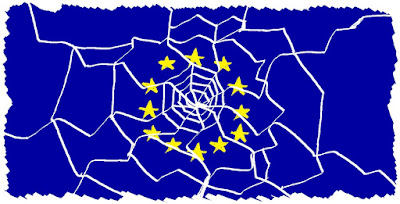
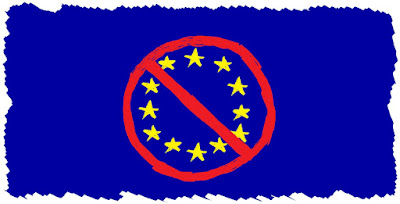
The EU is cracking down, but risks cracking up

The European Union's attempt to impose a liberal monoculture on all member states risks destroying the entire EU project.

Unelected EU authorities, in this case foreign judges at the European Court of Justice (ECJ), have clashed with the parliaments of sovereign states that represent nations comprised of millions of people, threatening them with funding cuts.

Progress forced

Far from "democratic values", what the EU says it wants to impose on Poland and Hungary using funding cuts as a weapon amounts to some specific cultural changes. It is in the hope of changing their stubborn attitudes to LGBT content and immigration, that resistant countries are to undergo this forced conversion to the Euro-liberal ideology. Even if one supports this ideology and considers it to be a fulfilment of social progress, funding cuts seem like an awful way of achieving it.

The EU wants the power to ensure that the next generation in places like Poland are educated and inculcated in such as way that they will share the EU bureaucrats' cultural opinions, and will help stamp out their own local Catholic traditions and values. Without the monolithic liberal monoculture, which the Pope referred to as one-track thinking, the ideological righteousness and uniformity of a superstate can be in jeopardy.

Siege against the majority

What is happening is a basic failure of statecraft that creates significant division in even one country, let alone a confederation of multiple nation states. It is a rejection of the sovereignty of a people, which always leads to the oppression of that people. One cannot impose compliance with a set of cultural norms on a region or nation without oppression, such as as this financial siege the EU now threatens on disobedient countries.

Action by the EU is also unlikely to improve the situation for minorities the EU supposedly wants to make life easier for. They too will be hit by indiscriminate financial punishment of a country. As well as being morally problematic, financial punishment of a country due to the majority sentiment against a minority is folly from a pragmatic point of view. It may only increase acts of hostility by majority against minority, with the latter being now associated with a foreign siege against the nation, thereby having the opposite effect to what the EU hoped, even if the nation eventually yields.

Disregard for sovereignty

The utter disdain for the self-determination of nations, the very basis of democracy, being displayed by the EU is yet another manifestation of a familiar colonial arrogance. This disdain is part of the same mindset that brought Western armies to Afghanistan, only to cause more suffering and problems before falling back in retreat after twenty years of failed vision.

Many people value their national culture and identity more than any economic benefit, which drove Brexit against unheeded warnings of empty shelves and queues. Rather than give in, people in places like Poland should be prepared to endure significant hardship to resist and abandon an imperious confederation

If the Poles eventually decide they have had enough of the EU, they can always look to the seas, learn from Britain, and count on us as a trading partner. In addition, it would not take long for other countries to leave.

Read More »

"Brexit Freedoms Bill" looks like a thinly disguised horror

Brexit was marketed under the slogan of taking control. However, what is being presented by PM Boris Johnson as the "Brexit Freedoms Bill" is fast coming across as a betrayal of that promise, giving control to ministers and not even to this country's Parliament.

The idea that Parliament might approve something that disempowers their own Houses and robs them of their duty to the British people seems scandalous. Even if you supported Brexit as a means of freedom from foreign authorities in the EU, it is an absolutely good thing that each and every item of EU legislation should remain in force in the UK until debated and struck down by Parliament.

Individual laws should be confronted

When something is in force, and there is no specific demand to remove it, it can be taken to have the tacit approval of the population, a sort of informal contract. To seek powers that suddenly pull the rug from under the feet of the British people, striking down regulation that they may in fact approve of, without giving MPs the chance to intervene on their behalf, is no favour to the British people.

Now that Britain has left the EU, the Conservatives have every right to argue against and strike down specific bits of EU legislation, or even large portions of it, and they should be pleased with that, rather than trying to remove all of it in a single chop. The desire to strike everything down at once is suspicious, especially considering that many environmental protections were enshrined in EU law and mirrored in UK law.

Remainers were right on this

Even as it seeks the authority to strike down EU legislation without debate, the Conservative government is avoiding making the most of Brexit to benefit the people, such as scrapping the minimum five percent VAT on energy bills enforced by the EU. Such behaviour points to a government that exploited genuine wishes for a divorce from the EU, to pursue power-grabbing and greed.

Remainers warned about this moment for a long time, and they were probably right that Conservatives were only in it as a scheme to benefit business interests. Whether or not they want to continue appending comments denigrating the many millions of people who sought Brexit, their point is valid and must be heeded at this stage.

Right now, the British people are not taking control of anything, but helping ministers take control and override Parliament. People voted to leave the EU because they wanted more control over the laws of the land, not less control, so now there is something for Leavers and Remainers to all agree on, provided that they can put aside partisan loyalty.

Read More »

Who are the "other side" in the new Cold War?

On 4 February 2022, China and Russia declared what they are all about. Multipolarity, multilateralism, and order are what they hope to offer other countries.

Defying the Western "rules-based order", the Russian and Chinese declaration expresses a commitment to the "international law-based world order". It calls for multilateralism over unilateralism, and the defence of the internal affairs of states against outside interference. In short, for them, the law takes precedence over moral proclamations in international relations.

Defenders of sovereignty

The Russian-Chinese declaration is a statement of opposition to Western meddling in other countries. The US's blatant attempts at regime-change when governments are not complying with Western liberal norms, as occurred in Syria, Venezuela and countless other countries, are recognised in the statement as something Russia and China are going to try to prevent.

It has to be pointed out that incitement of conflict and regime-change, like the West carried out in Ukraine in 2014, is the severest and most blatant kind of violation of national sovereignty. It is the precise kind of meddling that the very concept of sovereignty ever meant to abolish, violating the self-determination of peoples and forcing them to adhere to another country's model and ideology under its direct supervision even from thousands of miles away.

With their declaration, the Russians and Chinese express their willingness to thwart US-allied attempts at regime-change in other countries. It is an assurance to all the member states of the United Nations wishing to preserve their internal order against interference and ensure that they continue to develop naturally rather than being plunged into chaos by outsiders. This is a vision with cross-civilisational support all across the world, being appealing to a set of states so diverse it includes Serbia, Turkey, Ethiopia, Egypt, Kazakhstan, Peru and even Taliban-controlled Afghanistan. Unlike the Western unipolar disorder, currently bogged down in conflicts in Ukraine and completely defeated in Afghanistan, the multipolar order China and Russia suggest is an uncontroversial configuration that could actually be viable across the entire world.

A helping hand to all countries

It should not be underestimated how appealing the Russian-Chinese declaration will be to other nations. While everything the United States proclaims to member states of the United Nations is a vague threat or a demand for compliance with the US's will, the Russians and Chinese are pledging to mitigate this destructive behaviour by being supportive of countries under US pressure.

In other words, while the US tries to bulk up its aggressive military alliances, denigrate the rule of law everywhere, and overthrow the governments of the world, the Chinese and the Russians are driven by no objective other than preventing such capricious intimidation and violence. Instead, international law will steadily begin to gain teeth under Chinese and Russian protection, and Western attempts at regime-change will increasingly stall as the West's economic and military power gradually recedes.

Abolition of the US-led disorder

With its ideological proclamations and military alliances, the US can't avoid being bogged down in multiple conflicts with a whole host of different countries. It is driven by a craving for confetti-filled skies affirming its supreme importance, and for continuous tickertape parades of glory and victory for itself. What the US wants to accomplish, again and again, is the familiar world where its capricious authority, not the law, is paramount and countries must listen to America's every word. It wants to handwave away the sovereignty of other states and civilisations, declaring itself as the sole judge of whether a regime is legitimate, and judging them by comparison with its vain self. That is what is meant by the rules-based, or liberal international, order.

As of 2022, the US regime still views all other countries as inferior, devoid of agency, subject to US policy, or even completely under US jurisdiction. Such an attitude is in conflict with anyone who has a genuine interest in the shared wellbeing of humanity and would prefer the course of human history to take a path for the good of all rather than the glorification of a few.

In short, the hegemonic goals of the United States are fundamentally opposed to the goals of the United Nations and the authority of its Security Council. Unless the US is able to discard unilateralism, the UN could eventually reform against it and the US could eventually find itself or its NATO proxy states in opposition to UN peacekeeping forces backed by a majority of nations.

Rather than a communist bloc, it is now the multitude of diverse but law-abiding individuals and nations desiring some form of stability that are the "other side". Far from seeking a chaotic world devoid of US leadership and fraught with abuse, they recognise the liberal powers as the main sources of chaos.

Read More »

States versus social networks

Social networking websites and apps aim to manage almost every aspect of your life, curtail your access to information and take responsibility for your safety. In this regard, they are replacing government authority with their own. But when it comes to a clash with states, can they win?

As some background, Russian President Vladimir Putin allegedly said at this year's Valdai forum that social media companies had attempted to take on some form of state-like authority and displace the state itself in this regard, and that they had failed. The remarks are quoted by Russian broadcaster RT.

Unfortunately, the source linked by RT is a more than three hour-long video with an English translation in which Putin does not seem to make the alleged remarks, so it is hard to tell what exactly he meant.

If the RT quote was valid, Putin may have said large tech companies tried to assume some roles traditionally held by governments, and the attempts were "fleeting". He would have claimed, "in the US, the owners of these platforms were taken down a peg or two as it was in Europe as well," with some clarity added that this was due to "anti-monopolisation measures".

So, what did Putin mean?

Antitrust laws

The European Union currently has the Digital Markets Act (DMA) on the cards, which apparently will prevent a tech company from trapping users in an operating system or bundle of apps that solely favours its own services (and by extension news feeds) over any other firm's. It also apparently hopes to make sure users can uninstall pre-installed apps, which presumably means preventing US digital giants from forcing European users to use their apps and look at their news feeds.

Antitrust lawsuits have already targeted large tech companies in the US and Australia, with Amazon and Apple often being in focus. Facebook has also had a hard time in Australia, where the government sought for Facebook to pay news outlets for their content and Facebook attempted to push back against the government with help from Alphabet (who own Google), by carrying out a news blackout. Back at the start of the year, the push from Facebook failed to deter the Australian government and in fact other governments took Australia's side.

Subduing African governments?

Social media companies are uniquely confrontational towards governments, lately seeing themselves as authorities on par with some governments. Silicon Valley-based corporations like Twitter certainly see themselves as more reliable and legitimate authorities than African governments, as can be seen from their enforcement actions targeting government accounts in Uganda and Ethiopia.

Twitter's removal of government communications because they promoted violence is an attempt to de-recognise a state, because the monopoly on the legal use of violence is a defining aspect of a state. It is also an ineffective and failed usurpation of the state's responsibilities, since a state can still commit or allow violence whether Twitter deletes posts about it or not.

Victory over Trump?

Some might consider the banning of Trump to be a victory of social media over the US state, but in reality Trump was always an outsider to the US state and it was the US state that defeated Trump. The other branches of the US government certainly hated Trump, as did a majority of lawmakers. The spectre of these state figures cracking down after the evident electoral defeat of Trump was the factor most responsible for compelling organisations like Twitter and Facebook to kick Trump off social media.

The behaviour of social networks certainly suggests they have or had a willingness to compel governments to do their bidding, yet they have been ineffective. The actions of Twitter in Africa have simply resulted in bans targeting the website. Governments have shown they are willing and capable of pushing back against what are really just weak outfits. Social networks can be forcibly broken up due to laws, taken offline or bankrupted by fines at any moment the state truly loses patience with them.

States as continuous victors

Whether or not Putin was actually making comments like the above or sought to discuss the above developments, I do not know. However, the reported observation that social networks are losing their battle with states is valid. There have been plenty of times when new media, organisations and other actors created upheaval in the internal and international order, but they are ultimately crushed under the tank-treads of whoever wields the real power. At this moment, that still means nation-states.

Read More »