Showing posts with label RT. Show all posts

Your anti-war conscience is politically homeless

Russia's military campaign in Ukraine, launched last month, could be the beginning of a long and bloody war. Being already seen as such, it has likely alienated many individuals in the West who formerly sided with Russia against a morally dubious Western foreign policy establishment.

One of the places where those opponents of the West's moral skeleton liked to gather, following the 2003 Iraq War which largely discredited the West as a positive moral agent in the world, was the now heavily censored and cyber-attacked RT (formerly Russia Today). There, such individuals appeared as viewers, journalists, and guests for many years to express their anti-war views.

The doves fly

For anyone watching RT during the opening of Russia's offensive into Ukraine in February 2022, it would be impossible not to notice the great unease of the English-speaking anchors during this Russian government-funded news network's live broadcasts. It is likely that such individuals were recruited in the first place because of their unease with Western foreign policy, which made them more likely to sympathise with and be willing to present Russia's position to English-speakers for many years. Russia's sudden decision to employ force will have changed everything, leaving many of them shaken and confused. Why did Russia apparently choose to rain its own bombs on a country, rather than foiling America's dubious schemes and rejecting its excuses, as had been the case in Syria? That will be burdening their consciences.

Many disbelieved that Russia was planning a major military escalation in Ukraine, holding the Kremlin's promises to the world as true. Those who had supported the Russian media against Western military actions, out of a principled rejection of military intervention everywhere, will find it difficult to maintain that support (see Max Keiser, formerly of the Keiser Report, as an example).

Did Russia make the right choice?

It may be that the Kremlin made a strategic mistake by trying to dominate Ukraine militarily (I concurred with the British government about this in January). We live in an era of failed foreign interventions by even the most technologically sophisticated countries, which is why many will anticipate a slow Russian defeat and withdrawal from Ukraine. Ukrainians are not incompetent or cowardly, having made up a significant portion of the most competent and brave soldiers of the former USSR, so it would be wrong for Russia to think they are easily cast aside.

On the other hand, the Kremlin may have not made a mistake in Ukraine at all. The twin objectives of "demilitarisation" and "denazification" may be impossible to achieve if pursued to total completion all across Ukraine (a scenario vulnerable to "mission creep"), but they can easily be accomplished to a point that Moscow no longer needs to worry. A battered Ukrainian military, pushed back to the west of Ukraine, left with no threatening hardware, can be guaranteed by Russia's brutal and overwhelming firepower. A number of Ukrainian radicals can be assassinated or captured to showcase "denazification". Following such steps, Russia could withdraw. They could also almost certainly defend a number of seized Ukrainian cities indefinitely and annex them formally or informally, managing over time to convince their largely Russian-friendly populations to welcome the change.

Whatever the case, Russia's leadership must have known they would lose much support in the West. The only conclusion can be that, faced with NATO expansion into Ukraine, Russian leaders felt that the problem was so severe and so strategically dangerous that it was worth huge sacrifices to overcome it. It was worth losing any remaining soft power Russia had in the West, in favour of applying hard power in Russia's near abroad. NATO was being intransigent, refusing to rule out nuclear missiles being placed in Ukraine to target Moscow, declaring Russia as its enemy and Ukraine as its frontline partner against Russia.

Anti-war? You are outgunned

Considering the obstruction faced by anyone sympathetic to Russian worries or just simply critical of Western policy in Western societies, it is not surprising that Russia would decide to throw them under the bus. They were never likely to accomplish any significant influence or power anyway. Russia's might still ultimately lies in its unrivalled missile power and vast force of armoured vehicles on its territory, so they decided to exert this power rather than something more subtle.

Those who based their interpretation of world events solely on morality, and were led to side with Russia or China for that reason and reject the interventionist US and NATO, were doomed to be disappointed. International relations is not a moral affair, unfortunately. There are no values, only interests. Sooner or later, any national government will assert its interests in the most brutal way, reminding us all of what a state really is.

Russia is neither good nor bad, and that's what is so shocking to those who used morality to guide their interpretation of international events. Likewise, the United States is neither good nor bad, although the case can certainly be made that it is incompetent and confused, and that has always been the chief complaint that seems to have the most merit.

People who are anti-war ultimately get pushed aside by those favouring force, if we are in a situation where force can work. This is because being anti-war is solely a personal philosophy, not an expression of anything necessarily aligned with the national interest. As long as there are national interests and diplomatic quarrels, force will be part of the spectrum, the continuation of politics by the steel gauntlet of those who have might, if mere talk failed.
Read More »

Does Putin incite the West to do internet censorship?

Russian president Vladimir Putin has long held the internet to be CIA, and has not made a secret of this belief. He doesn't use social media, which gives some insight into his attitude towards it.

In many ways, Putin is a man of the Cold War, almost perfectly built to handle Russia's affairs in what is considered a new cold war. He thinks in terms of missile numbers, move and countermove.

And there is some truth to the internet being a weapon of the Central Intelligence Agency (CIA). When one looks at its origins, most of the work really was done by a US government agency. Those who work at US agencies often step between other bodies, including the CIA. That doesn't mean it couldn't backfire on the US, however, becoming yet another case of what the CIA calls blowback.

It is clear to Putin and his cohorts that a few things went wrong in the last global struggle against the United States, and they will be determined not to repeat their mistakes. During the first Cold War, the then-Soviet Union, to which the Russian Federation is the modern-day successor, had what is considered to be a stagnant society and economy.

Censorship as the loser's strategy

Censorship was arguably a factor in the failure of the Soviet system. People are driven to find the awful truth about things, or at least see the countervailing point of view. When you restrict access to alternative views, even successfully, the effort almost always backfires.

At present, the aforementioned fault seems to be more apparent in the Western countries than Russia. The least popular variety of boring establishment "journalists", are the loudest in calling for suppressing competing information and curtailing freedom of expression on the very internet the West created and which Putin loathes. An example of this is their backlash against Substack.

Western states and their most obvious and vapid shills hate current Russian media networks such as the award-winning "Putin's propaganda channel" RT and Sputnik with a passion, making exaggerated claims about their apparent influence over Western audiences. In the original Cold War, the Russians didn't even possess such media with which to tempt anybody in the West.

For many unthinking people, there is likely a guilty allure to subversive foreign media, which explains both the alleged fascination of Russians with Western entertainment during the original Cold War and the current popularity of something like RT in Western countries. Western companies and authorities labelling RT as dangerous, foreign, and state-sponsored does nothing to reduce people's fascination with it and may only increase it.

We could see an escalation of attempts to stamp out Russian-backed media, going further than simply placing labels on it and moving more and more towards prosecuting journalists and banning points of view entirely. The West can be expected to be more heavy-handed than Russia, because it is backed up by an arrogant moral certitude implicit even in all news reporting on foreign policy, whereas the Russians merely speak of their national security.

A West no longer for freedom?

The sad reality is that in this Cold War, the establishment in the West is treading a boring path of ideological orthodoxy and restriction, and the foreign adversary is not. This is not just an immaterial difference of ideals in a contest of might, either. The attitude of automatically rejecting "enemy" points of view and denying people the right to even see them is potentially a threat to democratic models, dulling the intellect and pacifying political opposition.

Examples of Western ideological inflexibility are the commitment to imposing frameworks of LGBT rights, minority rights, and the freedom to offend religious sensibilities, even when such things divide their own alliances and cause discomfort especially among culturally diverse states. The West presents such things as universal and set to be accepted everywhere, which is far from certain even in Europe.

Western leaders want Russians to be portrayed as the ones afraid of information, afraid of human expression and liberty, as in the previous Cold War. However, with Western press arbitrarily branding all kinds of media stories as attacks or disinformation that need to be suppressed for the sake of democracy (like the blocked and then unblocked New York Post story in the US 2020 election), it is clear that Western states are at least as intolerant places for online dissent as Russia. The minutiae of how information and people are disappeared in the West and Russia may be different, but that is no basis to argue that the West is morally superior or better justified to make anything disappear.

If Western politicians and journalists are right in their claims about the threat of Russian disinformation and social media accounts, it means Russia has effectively turned what Putin considers to be a CIA weapon - the internet - into a tool against the West. It means the US, particularly the CIA, is profoundly confused about its role in the world, having believed it stood for freedom and encouraged technologies to facilitate just that, only to realise this was a mistake and will threaten American statehood too.

In branding the internet as a tool of foreign subversion of their political systems, Putin's enemies in the West are making his own case for him. Impose greater control and restrictions on what information is allowed online? Exactly what he wanted from the beginning. Only allow information that fits with one's national security interests? The Kremlin will be the first to agree with that sentiment.

The internet might be broken up

If the West wants to subvert adversarial influence and narratives on the internet, it will help Balkanise the internet. If Putin's comments about the internet being CIA reflect his views, then he is looking for this anyway. As such, those who continuously serve up stories and articulate concerns about Russian influence are doing Putin's work to destroy the CIA's weapon. It could be argued, of course, that this weapon should be subverted or destroyed, but that is another conversation.

The spread of deep suspicion about all media and the motives of those who produce it, rather than the content itself, may be the real foreign trick, and a clever one. If foreign interference or sympathising with the enemy is perceived in even a minor act of dissent, or any vocal form of opposition, nobody will be willing to correct or reform anything, which will eventually have repercussions for government and economic performance.

Read More »

States versus social networks

Social networking websites and apps aim to manage almost every aspect of your life, curtail your access to information and take responsibility for your safety. In this regard, they are replacing government authority with their own. But when it comes to a clash with states, can they win?

As some background, Russian President Vladimir Putin allegedly said at this year's Valdai forum that social media companies had attempted to take on some form of state-like authority and displace the state itself in this regard, and that they had failed. The remarks are quoted by Russian broadcaster RT.

Unfortunately, the source linked by RT is a more than three hour-long video with an English translation in which Putin does not seem to make the alleged remarks, so it is hard to tell what exactly he meant.

If the RT quote was valid, Putin may have said large tech companies tried to assume some roles traditionally held by governments, and the attempts were "fleeting". He would have claimed, "in the US, the owners of these platforms were taken down a peg or two as it was in Europe as well," with some clarity added that this was due to "anti-monopolisation measures".

So, what did Putin mean?

Antitrust laws

The European Union currently has the Digital Markets Act (DMA) on the cards, which apparently will prevent a tech company from trapping users in an operating system or bundle of apps that solely favours its own services (and by extension news feeds) over any other firm's. It also apparently hopes to make sure users can uninstall pre-installed apps, which presumably means preventing US digital giants from forcing European users to use their apps and look at their news feeds.

Antitrust lawsuits have already targeted large tech companies in the US and Australia, with Amazon and Apple often being in focus. Facebook has also had a hard time in Australia, where the government sought for Facebook to pay news outlets for their content and Facebook attempted to push back against the government with help from Alphabet (who own Google), by carrying out a news blackout. Back at the start of the year, the push from Facebook failed to deter the Australian government and in fact other governments took Australia's side.

Subduing African governments?

Social media companies are uniquely confrontational towards governments, lately seeing themselves as authorities on par with some governments. Silicon Valley-based corporations like Twitter certainly see themselves as more reliable and legitimate authorities than African governments, as can be seen from their enforcement actions targeting government accounts in Uganda and Ethiopia.

Twitter's removal of government communications because they promoted violence is an attempt to de-recognise a state, because the monopoly on the legal use of violence is a defining aspect of a state. It is also an ineffective and failed usurpation of the state's responsibilities, since a state can still commit or allow violence whether Twitter deletes posts about it or not.

Victory over Trump?

Some might consider the banning of Trump to be a victory of social media over the US state, but in reality Trump was always an outsider to the US state and it was the US state that defeated Trump. The other branches of the US government certainly hated Trump, as did a majority of lawmakers. The spectre of these state figures cracking down after the evident electoral defeat of Trump was the factor most responsible for compelling organisations like Twitter and Facebook to kick Trump off social media.

The behaviour of social networks certainly suggests they have or had a willingness to compel governments to do their bidding, yet they have been ineffective. The actions of Twitter in Africa have simply resulted in bans targeting the website. Governments have shown they are willing and capable of pushing back against what are really just weak outfits. Social networks can be forcibly broken up due to laws, taken offline or bankrupted by fines at any moment the state truly loses patience with them.

States as continuous victors

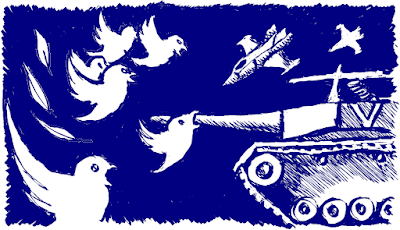
Whether or not Putin was actually making comments like the above or sought to discuss the above developments, I do not know. However, the reported observation that social networks are losing their battle with states is valid. There have been plenty of times when new media, organisations and other actors created upheaval in the internal and international order, but they are ultimately crushed under the tank-treads of whoever wields the real power. At this moment, that still means nation-states.

Read More »