Showing posts with label Google. Show all posts

Weaponising everything and everyone

In a way, accusing the other side of weaponising all sorts of things is itself an attempt to weaponise those things. By saying others are weaponising information, for example, as the Guardian does, you are basically turning information sources into targets for military action.

Or, you are telling people to close their ears to other sources and listen instead to you. You are taking the war to the information sphere and telling your audience to fight for you by only listening to you, thereby unnecessarily militarising and weaponising this sphere. You were the one who adopted the idea that making people hold specific beliefs is a military objective you want met, and declared this view publicly. Others may just have welcomed a healthy debate, with every point, from the most banal to the most diabolic, open for consideration. So, who really weaponised something?

Pandemic of censorship

In a 2020 exchange of ideas, the Mont Order information-sharing society agreed that “The way content related to the SARS-CoV-2 virus has been controlled is a potential gateway to increasingly aggressive censorship by Western governments”. This referred to the handling of medical disinformation, which can indeed be fatal, but later, disputed political information was increasingly being dealt with in the same way.

The Mont Order prediction seemed to come true later, when all dissenting sources on the Ukraine conflict were being treated as enemy operators rather than legitimate participants in a debate. Virtually every statement critical of the West and NATO was also suddenly treated as the statement of none other than Russian President Vladimir Putin, himself. The accepted idea became that everyone must promote a single narrative on any controversial issue, and all dissent must be dealt with like enemy shellfire, and silenced immediately.

Attention given to the idea of Russia spreading propaganda, and a lack of grasp of what propaganda is (other than that it is enemy information and therefore bad), has likely made many people in the West incapable of spotting a lot of very obvious and shoddy propaganda from the West itself. The cliché that the other side only produces propaganda and its claims can all be dismissed (even if true) is a huge accomplishment in propaganda. Inconvenient information is to be dismissed without consideration and even any source dismissed as an enemy agent, regardless of where it is located or its prior reputation. Everything becomes ad hominem attacks and shooting the messenger (in Ukraine itself, that probably is happening literally).

Being right doesn't mean being correct

Control of all publicly-consumed information works well for winning information wars where the goal is to convince the people of something, but it does not create informed experts. It is not hard to guess that Western journalists and politicians are themselves consuming dubious information, confusing a sense of righteousness for accuracy (the word "right" being the same word used to describe things that are morally encouraged or factually correct is a source of confusion, maybe). A rational person, meanwhile, concedes that our own regimes and the small, narrow blob of familiar corporate sponsors in the West could be motivated to spread their own fakes and propaganda.

In some ways, the discouragement of anything contrary to the single supreme narrative on a given controversy makes the West every bit as vulnerable to mindless propaganda as the most totalitarian societies in history. At worst, it means the very foundations of our supposed Western civilisation are just fakes and falsehoods, devoid of substance. We do not enjoy liberty, and lack access to the truth.

Weaponisation of TikTokers and YouTubers

The Biden administration actually intervened to convince TikTok creators to help it convince users of its position on the fighting in Ukraine. To the US government, everything is a weapon, and its foreign policy goals need to be achieved using every ethical and unethical method it can find.

It can seem as if genuine grassroots voices are rising up to support Ukraine's apparently morally just cause on YouTube, unanimously siding with the West and the supposed universal decency it represents when it comes to conflicts. The reality, though, is that even this behaviour is explained more by these people's reliance on a single platform aligned with the West and the sanctions it uses to control content creators. Creators want to stay in good standing with the platform, and this has more to do with what they say than any genuine moral stance on anything.

The sanctioned point of view

If we focus on YouTube's weaponisation, it is not hard to notice that content (even from entertainers) praising Ukraine or NATO in the ongoing conflict in Europe retains its monetisation (ads still play), in addition to which pro-Ukraine ads are allowed all over the site itself, despite this cause being ethically dirty and politically aligned in a violent conflict (revenue is blocked for video content on other conflicts). This tells us two things. First, that YouTube's management are guided by agents of the US government when it comes to foreign policy (certainly, Google is). Second, that the users creating the content had some kind of advance knowledge of the measures in place to reward or punish people depending on what conclusions their videos endorsed regarding the Ukraine conflict. With such factors in force, how likely is a content creator to arrive at balanced conclusions on the war in Ukraine? Basically, they have been given financial incentives to promote a specific view in their videos.

Clearly, the same narrow group of people who have sway over Western regimes and are able to treat politicians to all kinds of carrots and sticks are doing the same with even small content creators online. Consequently, what appears to be mass support popping up for a cause is always more likely to just be financially motivated and originating from a very narrow source.

To display a Ukrainian flag at one's church, or on one's car or social media profile, is not an autonomous action by people. Nobody was really moved by what they saw in Ukraine or in any other foreign conflict, but by sanctions, i.e. a cycle of reward and punishment by the powerful, which is the basis of all Western policy and morality. The resulting activity supporting the state's policies is subtly state-controlled. One way or another, incentives are created by the state and influence operations take place, in an effort to weaponise everything and everyone to sanitise and prop up an otherwise dubious and dirty policy of inflaming a foreign conflict.
Read More »

States versus social networks

Social networking websites and apps aim to manage almost every aspect of your life, curtail your access to information and take responsibility for your safety. In this regard, they are replacing government authority with their own. But when it comes to a clash with states, can they win?

As some background, Russian President Vladimir Putin allegedly said at this year's Valdai forum that social media companies had attempted to take on some form of state-like authority and displace the state itself in this regard, and that they had failed. The remarks are quoted by Russian broadcaster RT.

Unfortunately, the source linked by RT is a more than three hour-long video with an English translation in which Putin does not seem to make the alleged remarks, so it is hard to tell what exactly he meant.

If the RT quote was valid, Putin may have said large tech companies tried to assume some roles traditionally held by governments, and the attempts were "fleeting". He would have claimed, "in the US, the owners of these platforms were taken down a peg or two as it was in Europe as well," with some clarity added that this was due to "anti-monopolisation measures".

So, what did Putin mean?

Antitrust laws

The European Union currently has the Digital Markets Act (DMA) on the cards, which apparently will prevent a tech company from trapping users in an operating system or bundle of apps that solely favours its own services (and by extension news feeds) over any other firm's. It also apparently hopes to make sure users can uninstall pre-installed apps, which presumably means preventing US digital giants from forcing European users to use their apps and look at their news feeds.

Antitrust lawsuits have already targeted large tech companies in the US and Australia, with Amazon and Apple often being in focus. Facebook has also had a hard time in Australia, where the government sought for Facebook to pay news outlets for their content and Facebook attempted to push back against the government with help from Alphabet (who own Google), by carrying out a news blackout. Back at the start of the year, the push from Facebook failed to deter the Australian government and in fact other governments took Australia's side.

Subduing African governments?

Social media companies are uniquely confrontational towards governments, lately seeing themselves as authorities on par with some governments. Silicon Valley-based corporations like Twitter certainly see themselves as more reliable and legitimate authorities than African governments, as can be seen from their enforcement actions targeting government accounts in Uganda and Ethiopia.

Twitter's removal of government communications because they promoted violence is an attempt to de-recognise a state, because the monopoly on the legal use of violence is a defining aspect of a state. It is also an ineffective and failed usurpation of the state's responsibilities, since a state can still commit or allow violence whether Twitter deletes posts about it or not.

Victory over Trump?

Some might consider the banning of Trump to be a victory of social media over the US state, but in reality Trump was always an outsider to the US state and it was the US state that defeated Trump. The other branches of the US government certainly hated Trump, as did a majority of lawmakers. The spectre of these state figures cracking down after the evident electoral defeat of Trump was the factor most responsible for compelling organisations like Twitter and Facebook to kick Trump off social media.

The behaviour of social networks certainly suggests they have or had a willingness to compel governments to do their bidding, yet they have been ineffective. The actions of Twitter in Africa have simply resulted in bans targeting the website. Governments have shown they are willing and capable of pushing back against what are really just weak outfits. Social networks can be forcibly broken up due to laws, taken offline or bankrupted by fines at any moment the state truly loses patience with them.

States as continuous victors

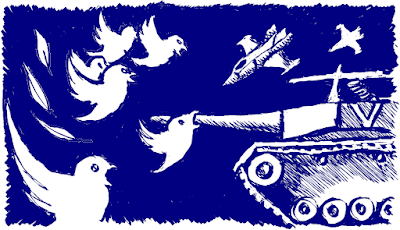
Whether or not Putin was actually making comments like the above or sought to discuss the above developments, I do not know. However, the reported observation that social networks are losing their battle with states is valid. There have been plenty of times when new media, organisations and other actors created upheaval in the internal and international order, but they are ultimately crushed under the tank-treads of whoever wields the real power. At this moment, that still means nation-states.

Read More »

YouTube commits to bringing you bad videos

YouTube's decision to hide dislike counts on all videos is absurd and seems more like the result of a child's tantrum than an informed team decision. I say this as one of the first users of YouTube in the days when few had heard of it, who uploaded content and withstood heavy dislikes. Those were barbaric times, when the scary dislike bar was red with blood.

Without being able to see the number of dislikes on videos, the dislike button itself becomes redundant. Pushing it will do nothing for viewers except indicate to the person who pressed it, that they pressed it. It will serve no purpose, and might as well be removed too.

What will the new system even look like?

Without being able to see the dislikes on videos, being able to see the likes on videos is also of no consequence. YouTube did not explain how it would display the now-meaningless likes on a video while they compete against nothing. Yes, we are used to the competing like and dislike bars, formerly coloured before they were reduced to thin lines to look less impactful, and eventually turned grey as if to reduce the crimson stain of being disliked too much. Will there now simply be a grey line representing likes, always the same on every video, that doesn't indicate anything?

This might be an example of inclusivity and inoffensiveness reaching an extreme at which it undermines inclusivity itself - a point where the desire to value every voice comes full circle and instead excludes every voice. Moreover, if people are excluded from expressing their dislike of something, they still won't like the thing and their resentment may only be more intense, perhaps moving to an ever more offensive comments section.

Failure to fight disinformation

As well as causing other problems, YouTube's decision to remove the public dislike count may undermine its own fight against disinformation on the platform. A significant amount of false information, such as bogus science, proliferates on YouTube and is combated by a sensible and balanced community who dislike, flag and debunk such content. Removing the dislike button on such videos will remove an obvious sign that might have prevented people from falling for scams and disinformation. In short, YouTube's decision to help bad videos look good, to safeguard the feelings of bad creators, will probably allow internet conmen to take their game further and claim more victims.

Who is vandalising YouTube?

At the end of the day, the site and all the changes it makes are up to Google, and YouTube will continue to remain a very popular service despite this change. However, such a change points to a lack of talent or creativity.

YouTube complains that mobs are exploiting their system. However, if YouTube's hands only deface and destroy services and features, they are vandalising their own website rather than improving it. They won't make people more feel safer or more respected.

Read More »
